
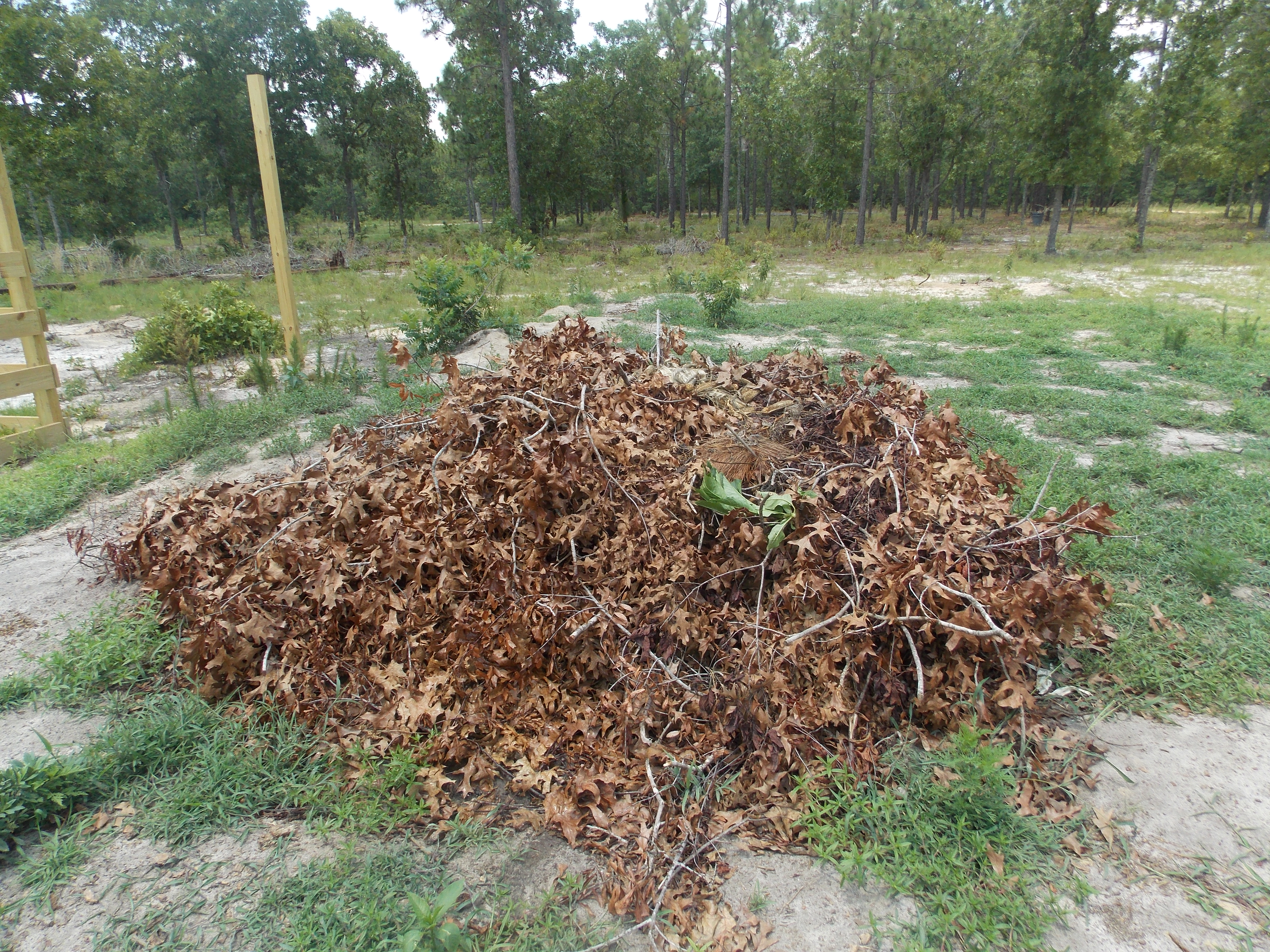
The last brushwood compost write-up concluded with the initial phase of piling. This pile sat being periodically watered for about 28 days awaiting the time for turning. This write up consists of some observations during the turning process as well as some errors from the gathering of the brushwood.
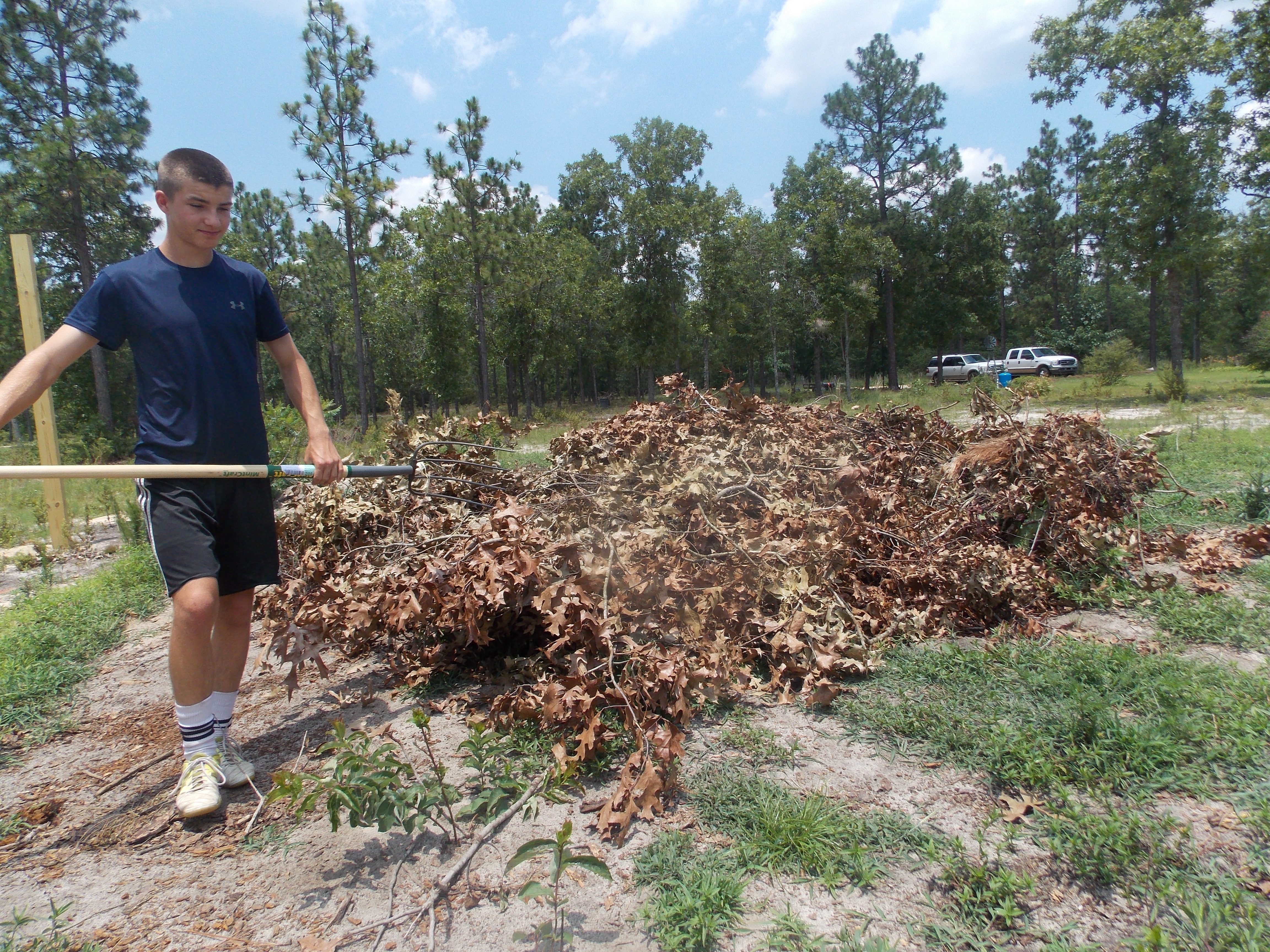
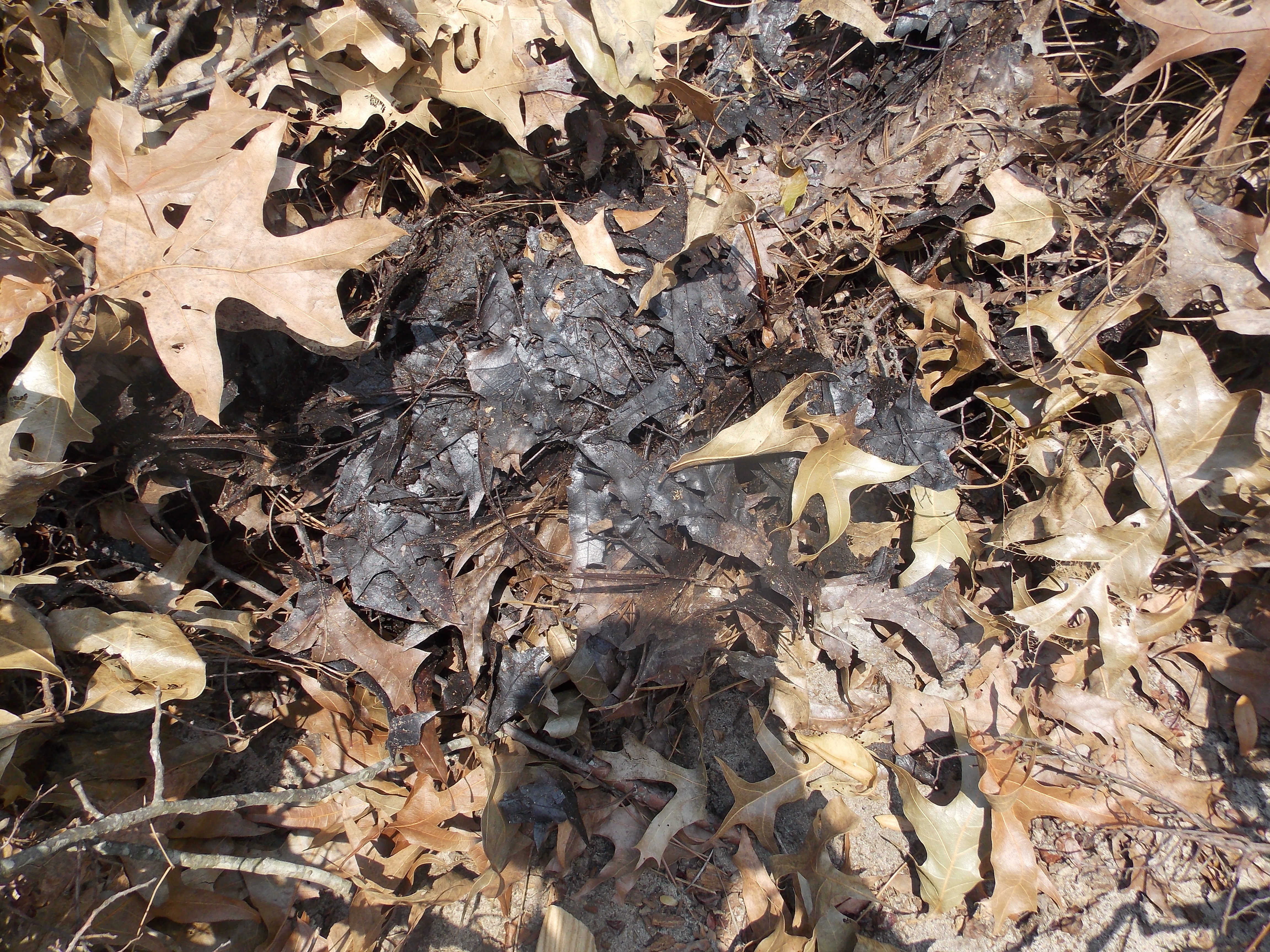
The size of the pile had shrunk considerably from the beginning height, and the wonderfully earthy smell that is associated with composting was already detectable. I was excited to see what unseen activity had taken place as the pile sat. Brown leaves appeared as a jacket concealing the interior activity. As the exterior covering was peeled back some green was revealed, and so too was a hive of activity. There were varying and numerous insects busy devouring the organic matter and depositing their droppings. The sweet beginnings of of soil building happening right in front of my face. I always find it amazing to see God’s great creation in all of its intricate wonder at work. I was surprised by the amount of insect activity happening inside the pile.
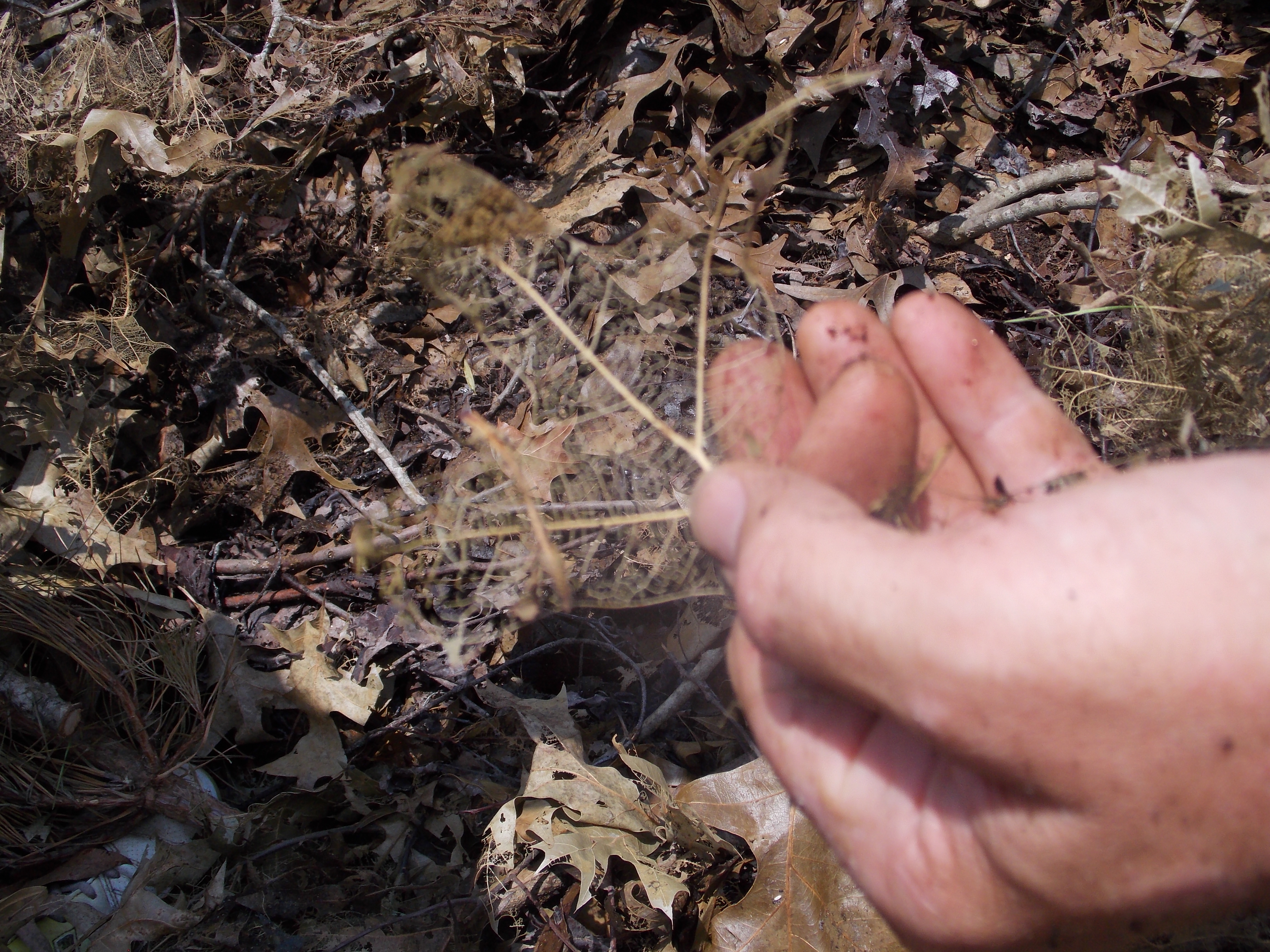
One of the neatest things that I saw was a leaf that had been completely consumed except for the vein structure. The bulk of the activity was occurring near the bottom of the pile as was the bulk of the decomposition activity. There was no real heat to speak of, but I am not certain that there should have been very much heat at this point. This is all a learning experiment to us, but one that we are very enthusiastic about with regard to the possible applications on our homestead. The biggest future benefit of brushwood composting for us is soil building. We have sandy soil that is very
poor due to a lack of organic matter and as a result we are in desperate need of the soil building properties of good compost application. Of course the original intent of Jean Pain’s work was the prevention of wild fire, and this is of course a wonderful benefit to our homestead as well.
We did learn quite a few things that will be valuable during the gathering and assembly of our next pile. Giving careful attention to the length and width of the branches being used in manual composting is equally as important as the girth of the particular branch. We had several branches in our initial pile that should have been cut down more, and because they had not it made turning the pile very difficult.
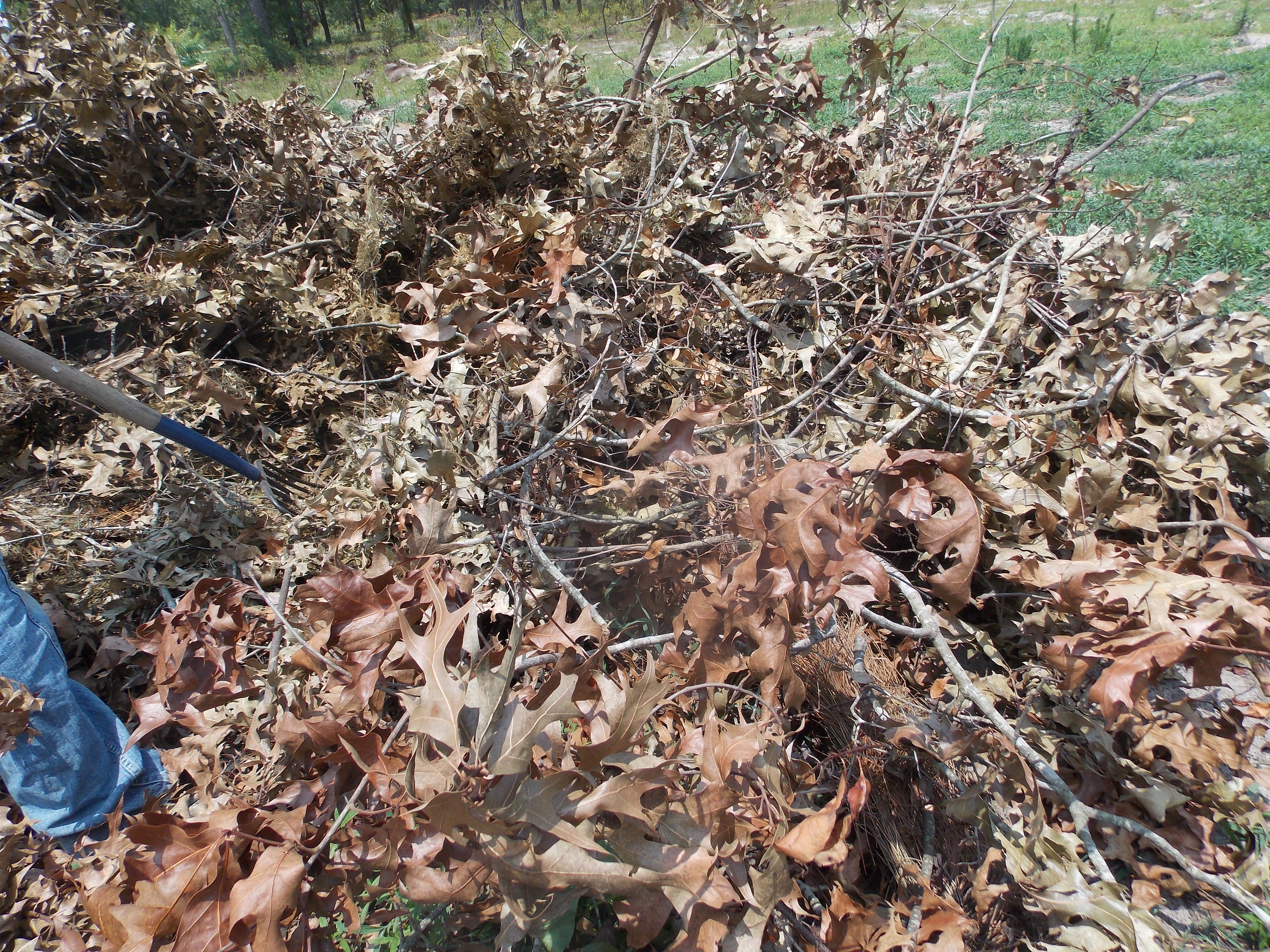
Keeping the limbs as short as possible will be a priority during our next pile. I also think that keeping the materials smaller will allow us to make a much more dense pile. This will increase our time during the gathering and separating stage, but will be worth the added time investment during the piling stage and will likely improve the finished product. Along with gathering smaller branches, gathering more fallen leaf material will add more usable carbon to the pile which will aid in balancing all of the green leaves on the brushwood. It is also readily apparent why Jean Pain moved quickly to a grinding and composting model. The cutting down of larger pruned branches into smaller pieces must happen as the gathering is taking place so that the freshness of the cuttings will not be lost making this very labor intensive and time consuming. While this may not be much of a consideration on a small homestead in the Southeastern US it may indeed be a concern in other locations.
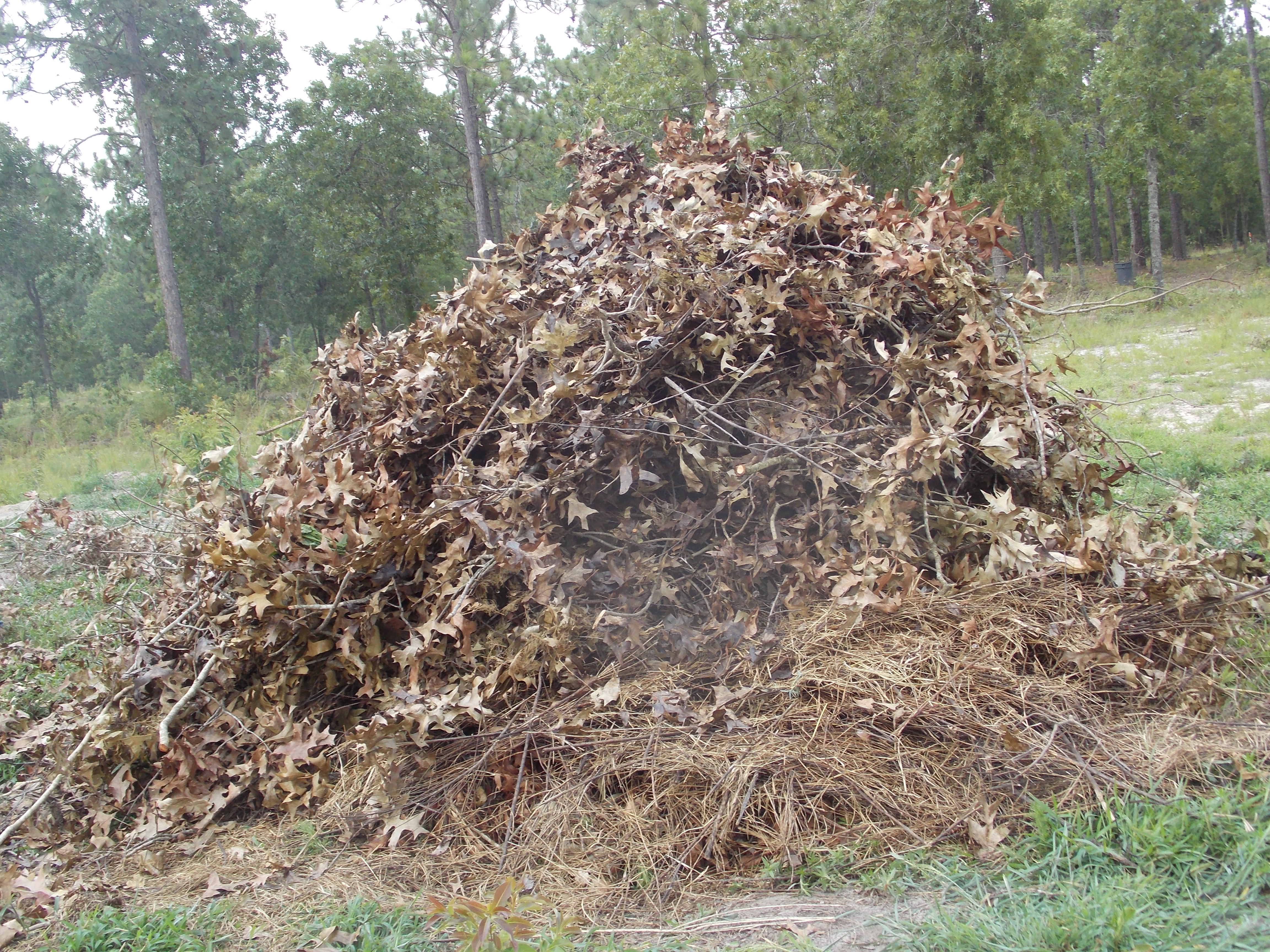
As we began to form the pile for composting, we took note of limbs and branches that were too thick or long and removed them to use in other ways. The pile, according to Jean Pain, needed to be approximately five and half feet tall by seven feet wide at the base. After carefully piling up the material then a layer of sand covered the pile. This step will require more practice to prevent the pile from compressing too small. Finally, the pile is dressed with pine boughs to act as a thatch roof preventing rain from washing through the pile too quickly. Now the pile will sit with little attention, aside from the occasional watering, for at least the next 90 days. It will be exciting to see what the interior will look like after that time, however due to the fact that the ninety day period ends near the thirtieth of September it may sit until spring to be used as hummus that may be incorporated into the soil.
Although we were able to complete this initial pile and test it only served to show us how far we need to go to become truly efficient at it as Jean Pain is. No amount of reading will ever substitute for real practical experience, and I am thankful to have begun to build that practical knowledge of brushwood composting. I look forward to getting into the fuel and heat aspects of composting as well as moving to a chipped brushwood as Jean Pain did later on. I will be sure to do my best to document it all so that others may benefit from our experiences as well as acting as a memory that I may look back on if needs be. Thank you for reading, and hopefully you will be able to incorporate brushwood composting into your homestead as well.
 Carolina Permaculture