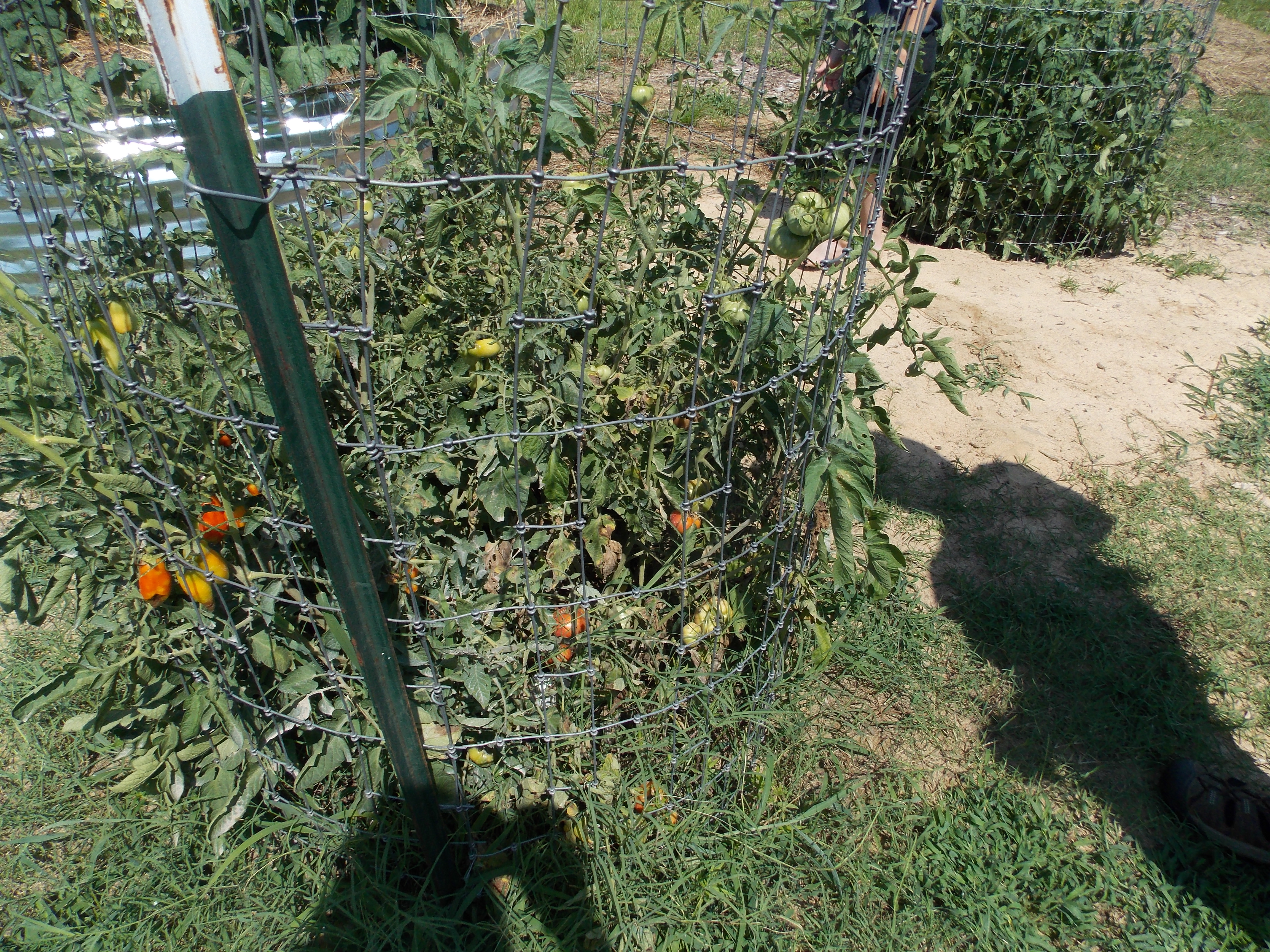
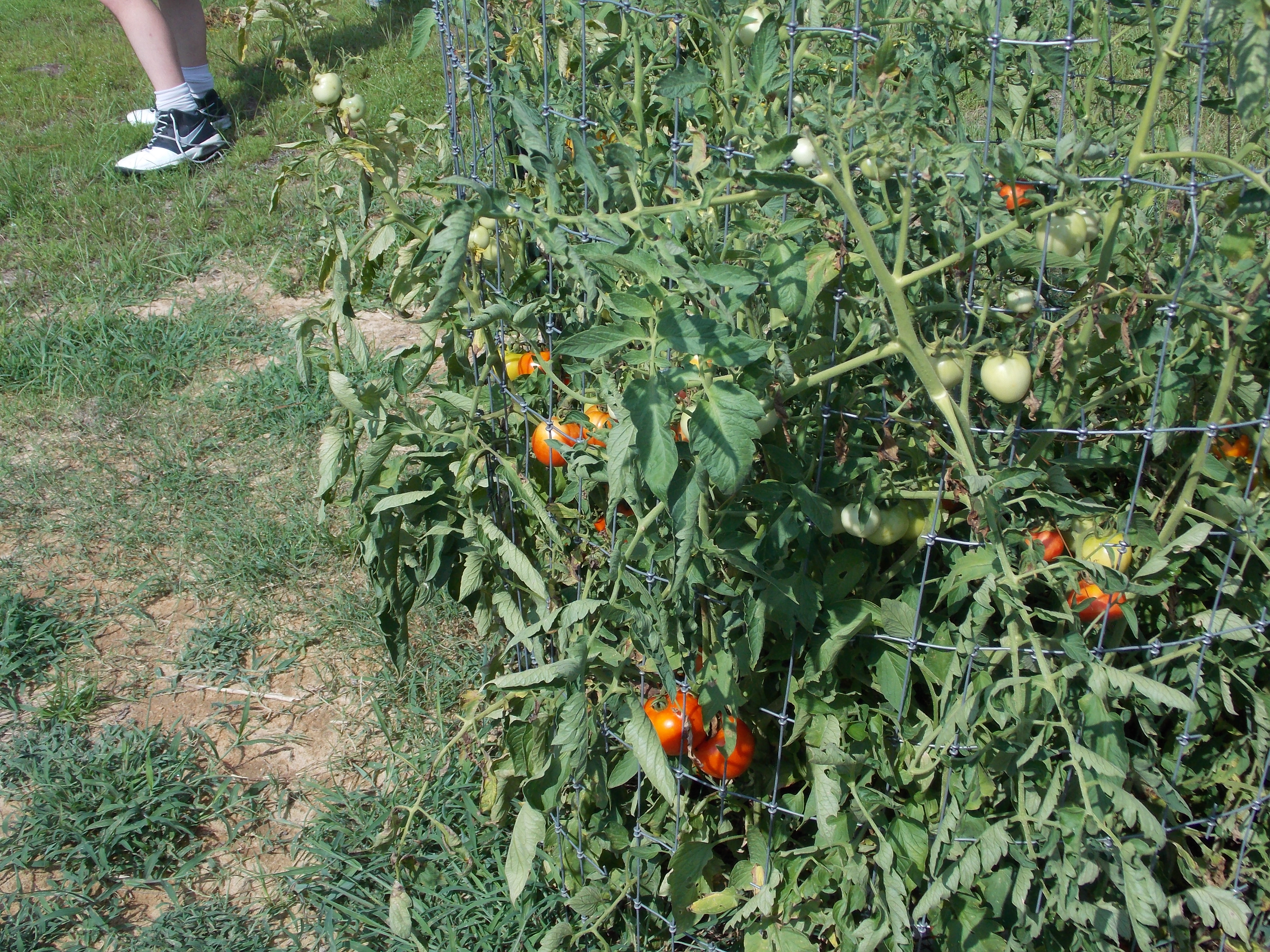
This will likely be the last article that I submit to you for this little project. I must say that all in all this has been an experiment of mixed outcomes. There were many good takeaways from this test event if the yield outcome was less than ideal. One major take away from this was that the fence I used (48″) was far too tall to manage anything from the top down. Perhaps a 36″ or 24″ fence would have done better by allowing the grower to reach into the center from the top. This would have eliminated the need to cut holes in the fence to reach through. This would have, however, allowed the vines to spill further outside of the cage which may be undesirable to some growers, but might have made pest control and pruning more possible. As an aside pruning would have been very helpful for production and plant inspection but was nearly impossible due to the inability to properly reach the plants.
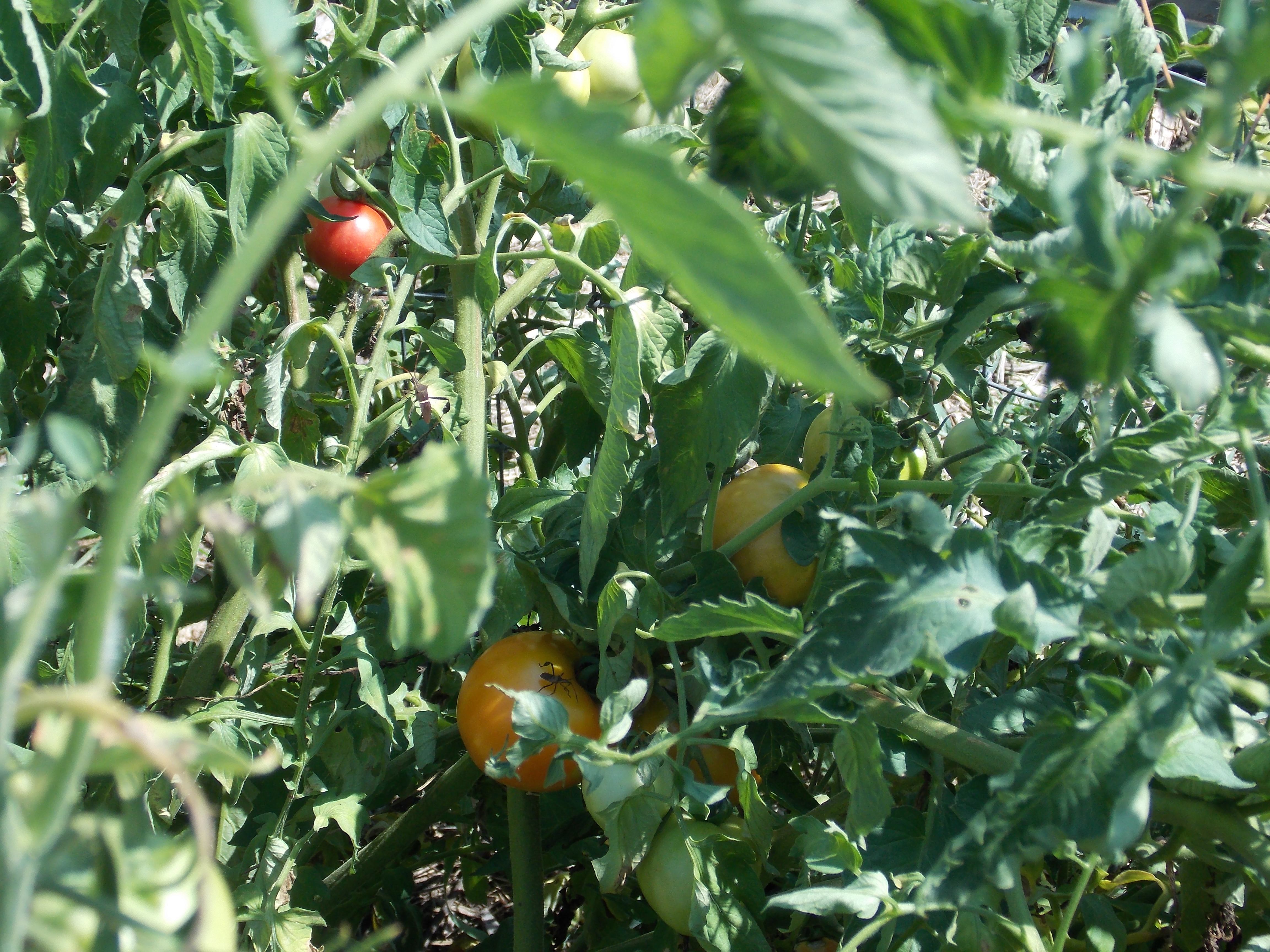
Pests are another serious issue with this method of growing tomatoes. We use no chemicals on our homestead and most all of our pest control is provided by guinea fowl, manual removal, Diatomaceous Earth

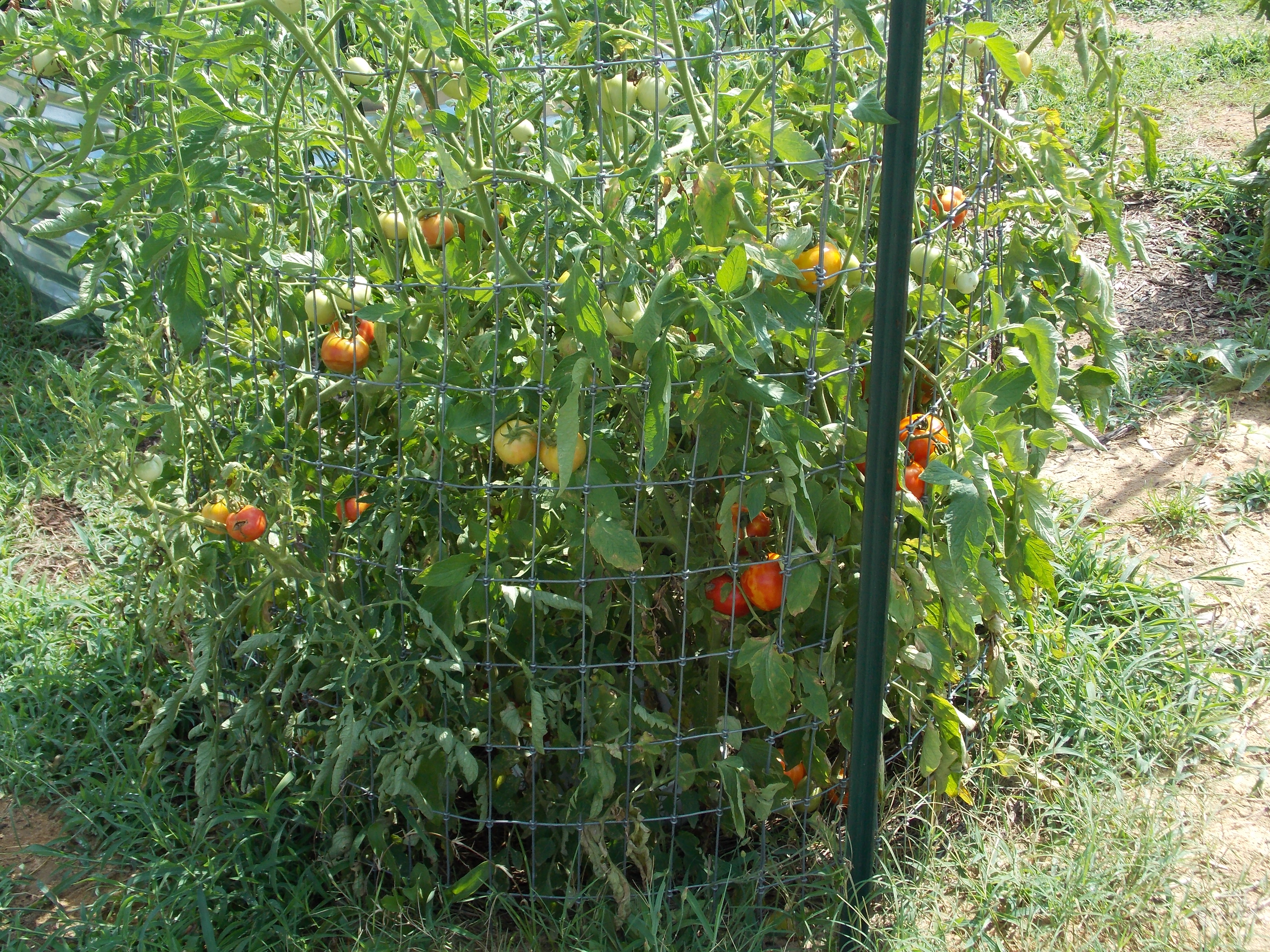
The only problem again is the difficulty in gathering the fruit. Many of the fruit spoil on the vine because they are difficult to see through the dense leaves even after they have become red. Many of the choicest fruit were near the lower center of the plant and practically unreachable, consequently they were lost to spoilage. I do not think that I will try another planting of this sort in the future though I may try a single one next year with a shorter cage to see if the method can be vindicated. One great take away from this test was in the planting method. I think that I failed to mention in previous articles that we dug a three foot diameter and three foot deep hole to loosen and amend each planting of four plants around a bucket. All of the subsoil was amended with copious amounts of compost from our hen house (this mainly consisted of chicken manure, leaves and old hay from when the birds were closed up over the winter on deep mulch). This method of planting not only greatly improved the level of organic matter in the soil, but also loosened all of the subsoil making it easier for root penetration and development. In the future I will use more traditional methods for planting tomatoes, but designed in alignment with Permaculture
 Carolina Permaculture