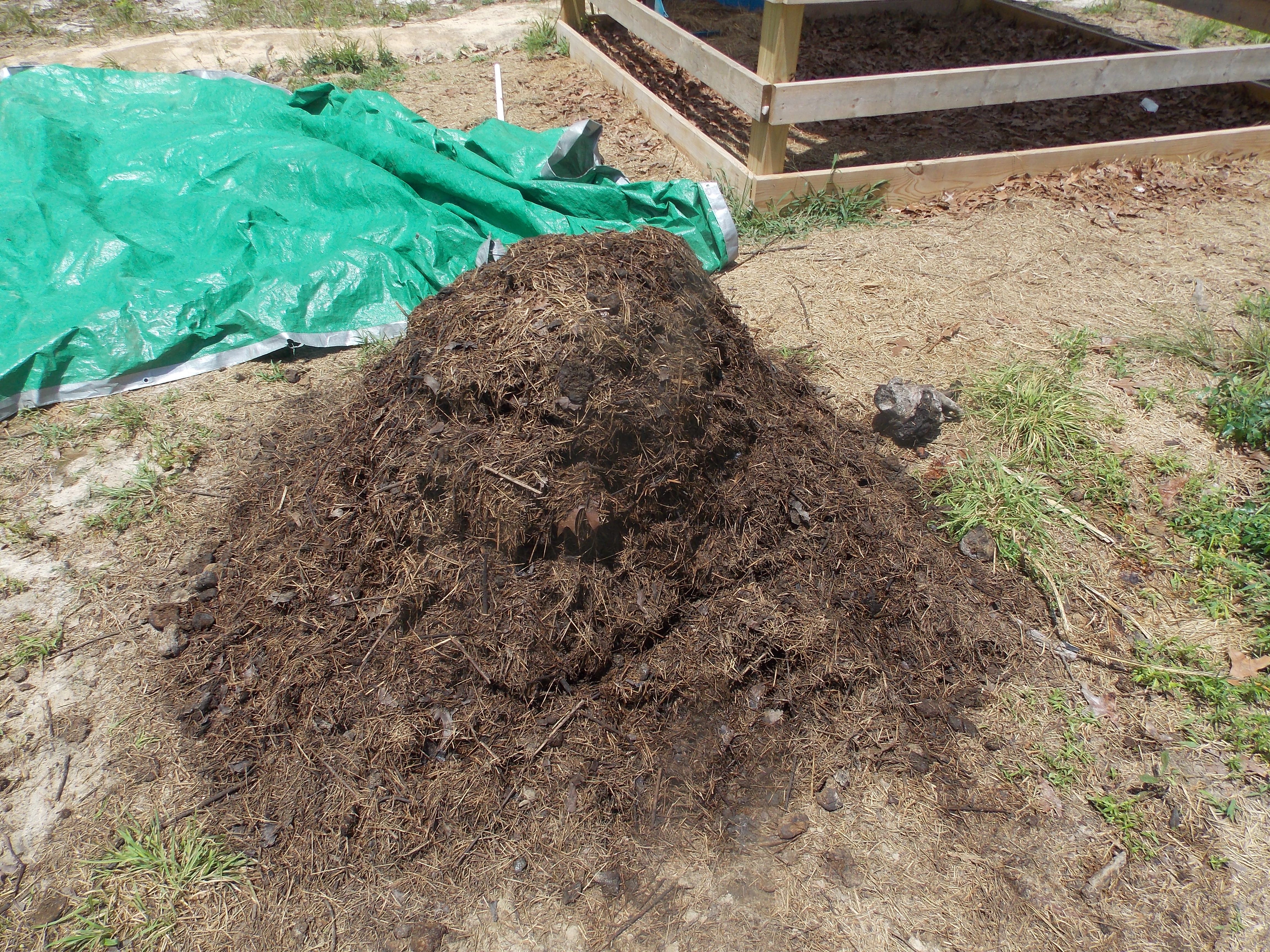
Time to explore more of the methods of Jean Pain as written in The Methods of Jean Pain. For this experiment a small tomato plantation of four indeterminate tomatoes. Although our experimental pile of brushwood compost is just underway and thus far from usable we were able to substitute a fresh pile of hot compost made from cow manure, old hay, leaves, and other farm wastes. I am certain that the compost is not nearly as complex as a true brushwood compost, but should still provide us with a reasonable approximation.
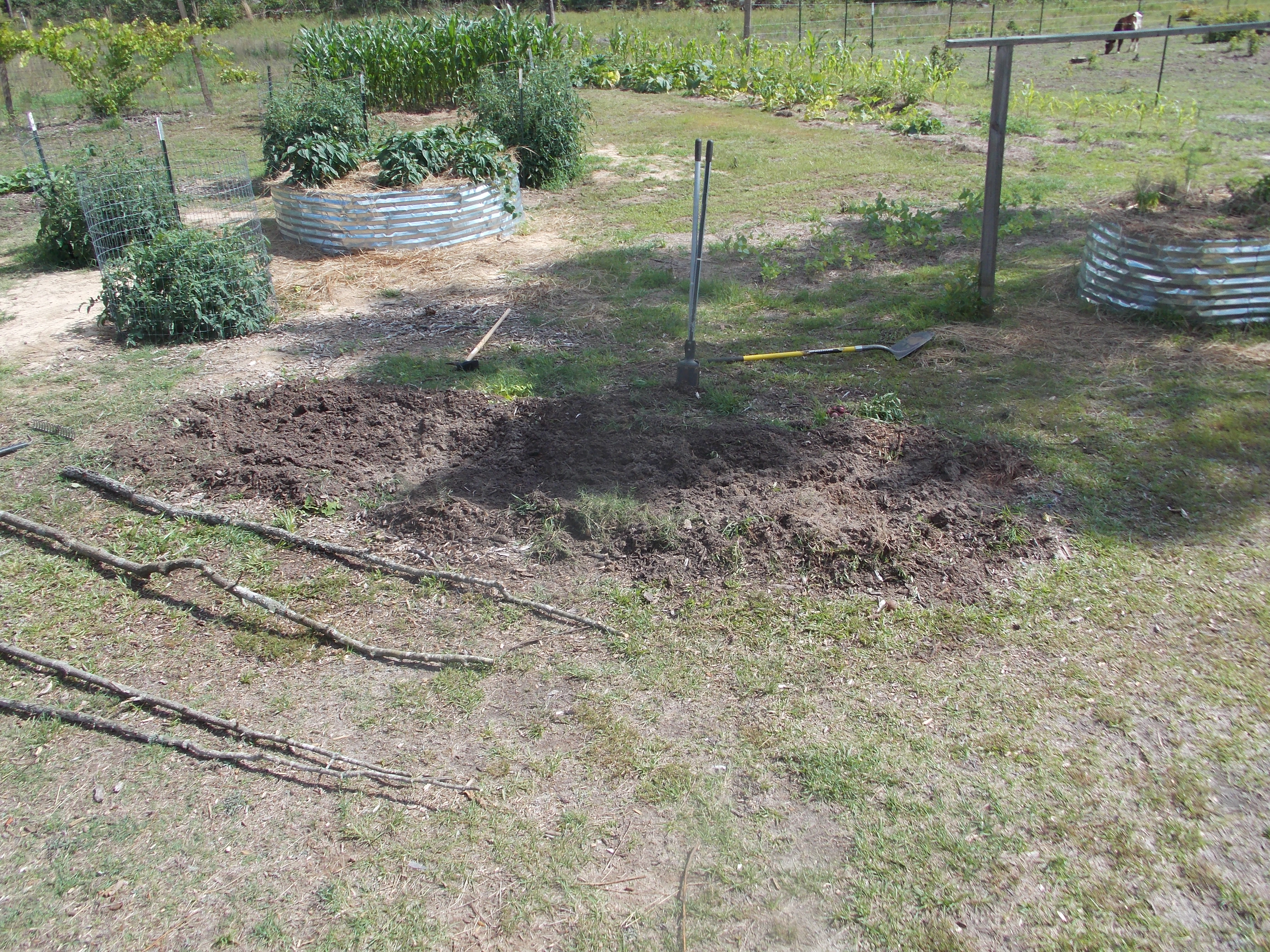
After selecting the compost the next step was to locate a spot for the plantation. I chose a spot near the backdoor of our home for two reasons. First, I want to be able to keep an eye on the plantation and see how it is progressing without having to make a special trip out to it. Secondly, I wanted to stick with Bill Mollison’s slipper principle; keeping this plantation close to the kitchen so that one’s slippers wouldn’t get wet while going out to harvest tomatoes for your morning breakfast. With those thoughts fresh in my mind I selected an area almost immediately off my back porch.
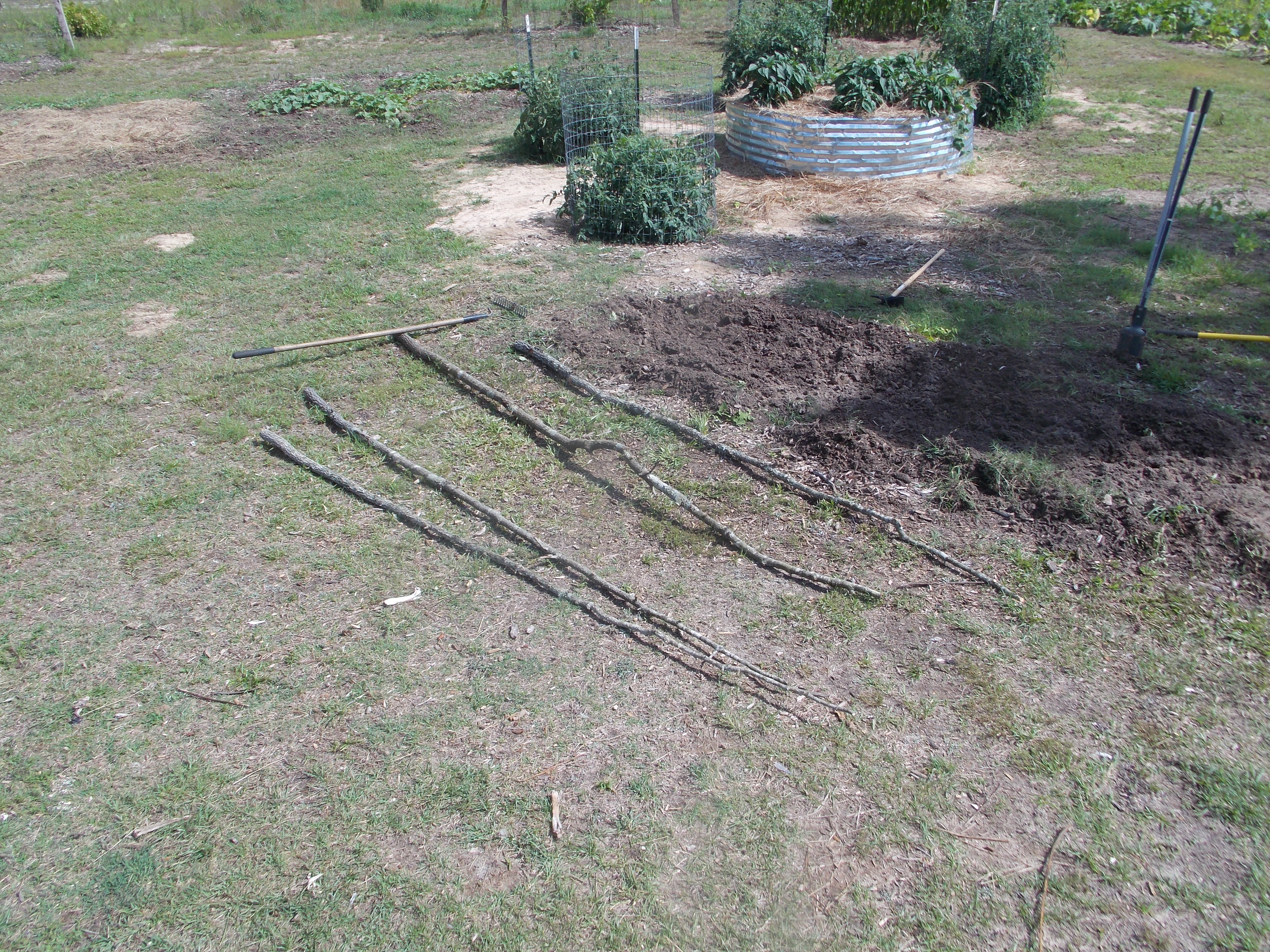
There were some clumps of grass, a few pioneer species, and a volunteer potato plant that needed to be removed to facilitate this new plantation. The picture was taken after the initial raking and hoeing had taken place. Next up was to select stake to loosely tie the plants to as they grew. For this task I selected four Turkey Oak saplings that were undesirably close to better trees. I pruned all of the limbs and side shoots and cut them down with a pair of lop shears. I cut the new tomato stakes about nine feet in length to accommodate sinking them into the ground and to provide adequate support for the plants. I know that nine foot stakes sounds at little long, but keep in mind that Jean Pain grew tomatoes in excess of seven feet with this method and the soil that he started with was of similar composition as my own (sandy, lacking organic matter, and compacted).
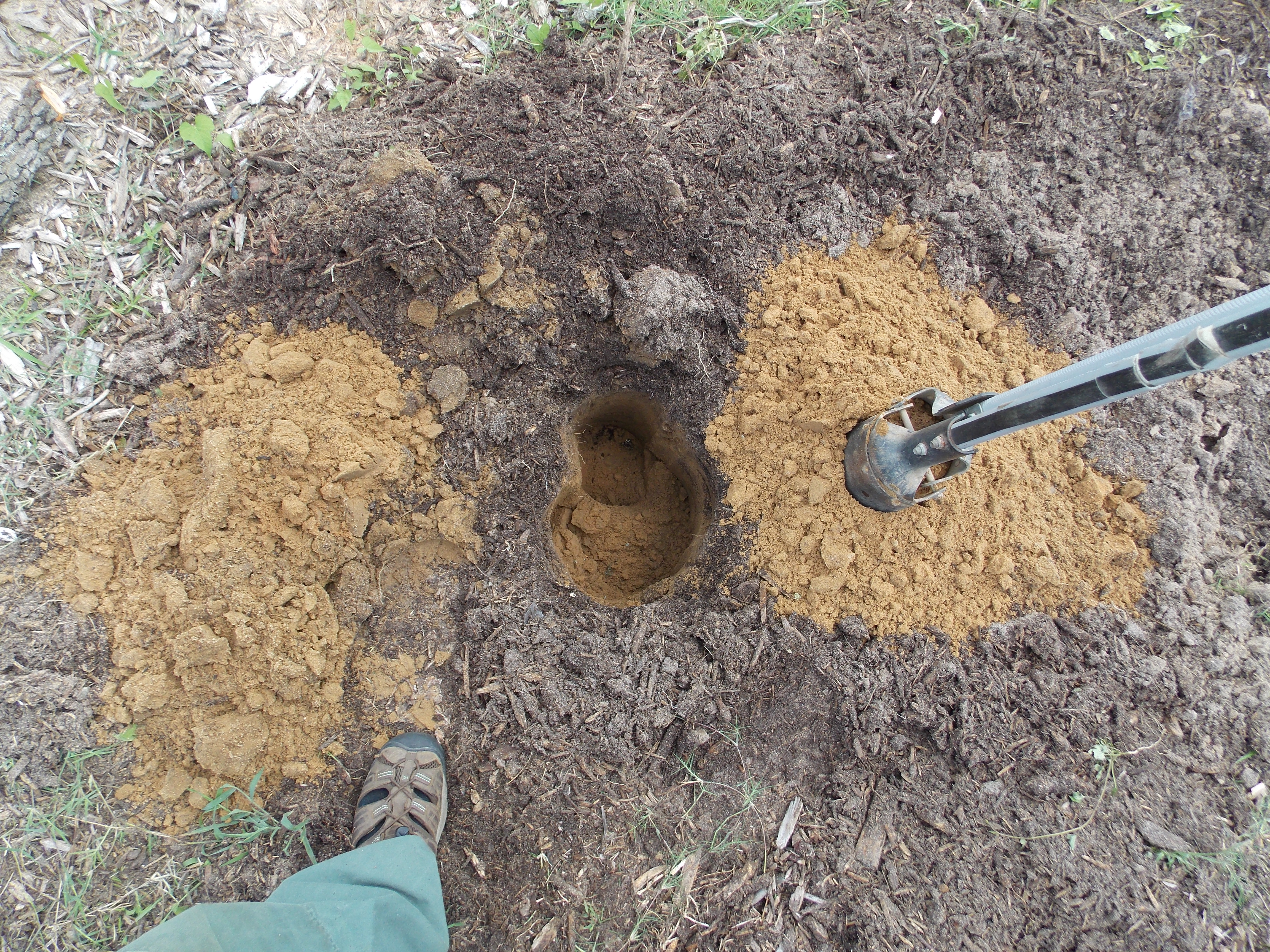
I have heard it said to dig a twenty dollar hole for a ten dollar plant, well these are at least five dollar holes for two dollar plants so the ratio is correct (humor is quite difficult to do in the written word). Due to soil compaction I used a post-hole digger to make my holes and also to loosen the subsoil deeper than I actually intended to plant to encourage the roots to continue downward growth.
I selected two different indeterminate heirloom varieties for this trial. The first variety is the Mortgage Lifter, a large smooth skin slicing tomato and the second is the San Marzano, a roma-style plum tomato perfect for stewing and sauces.
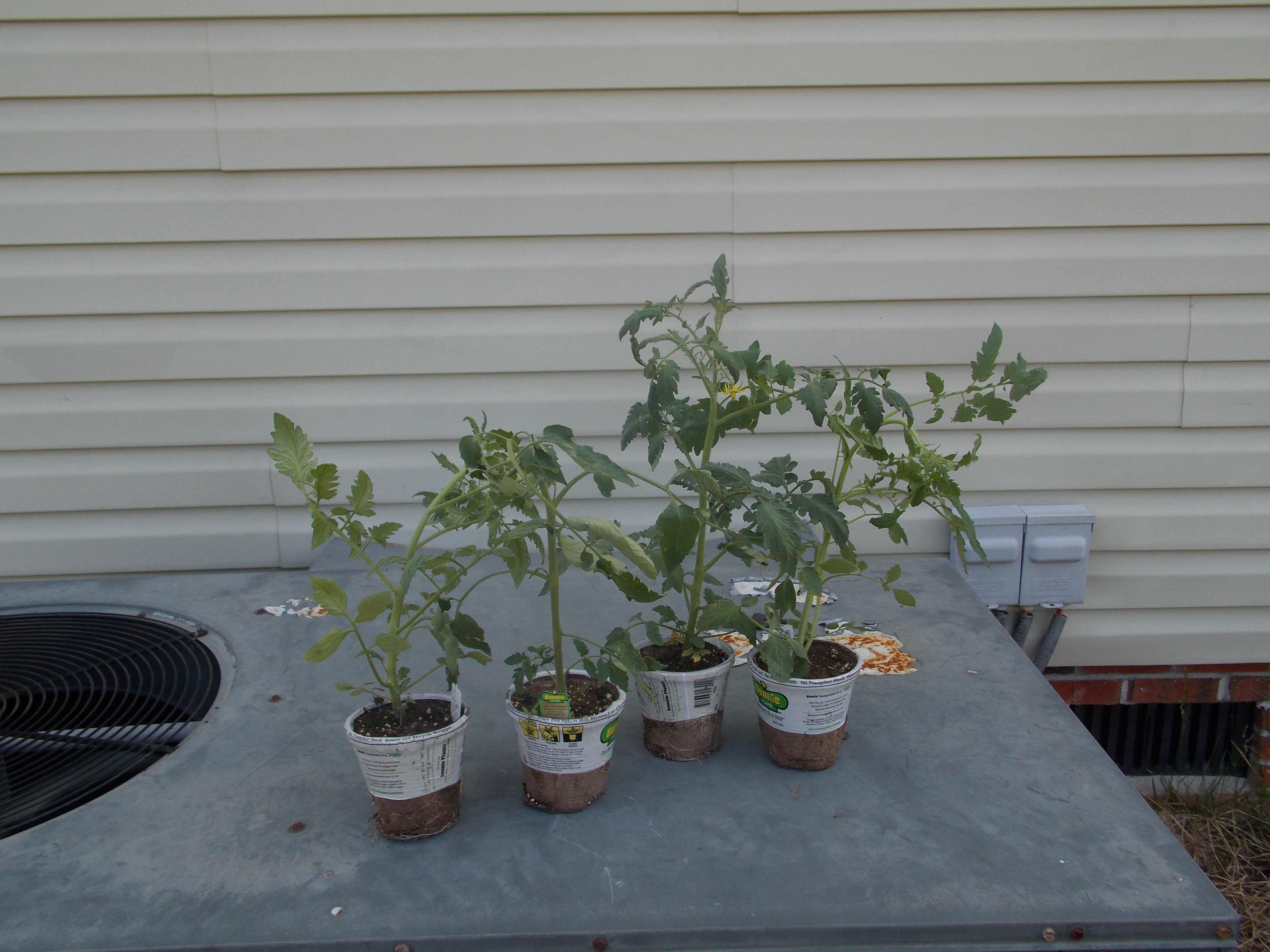
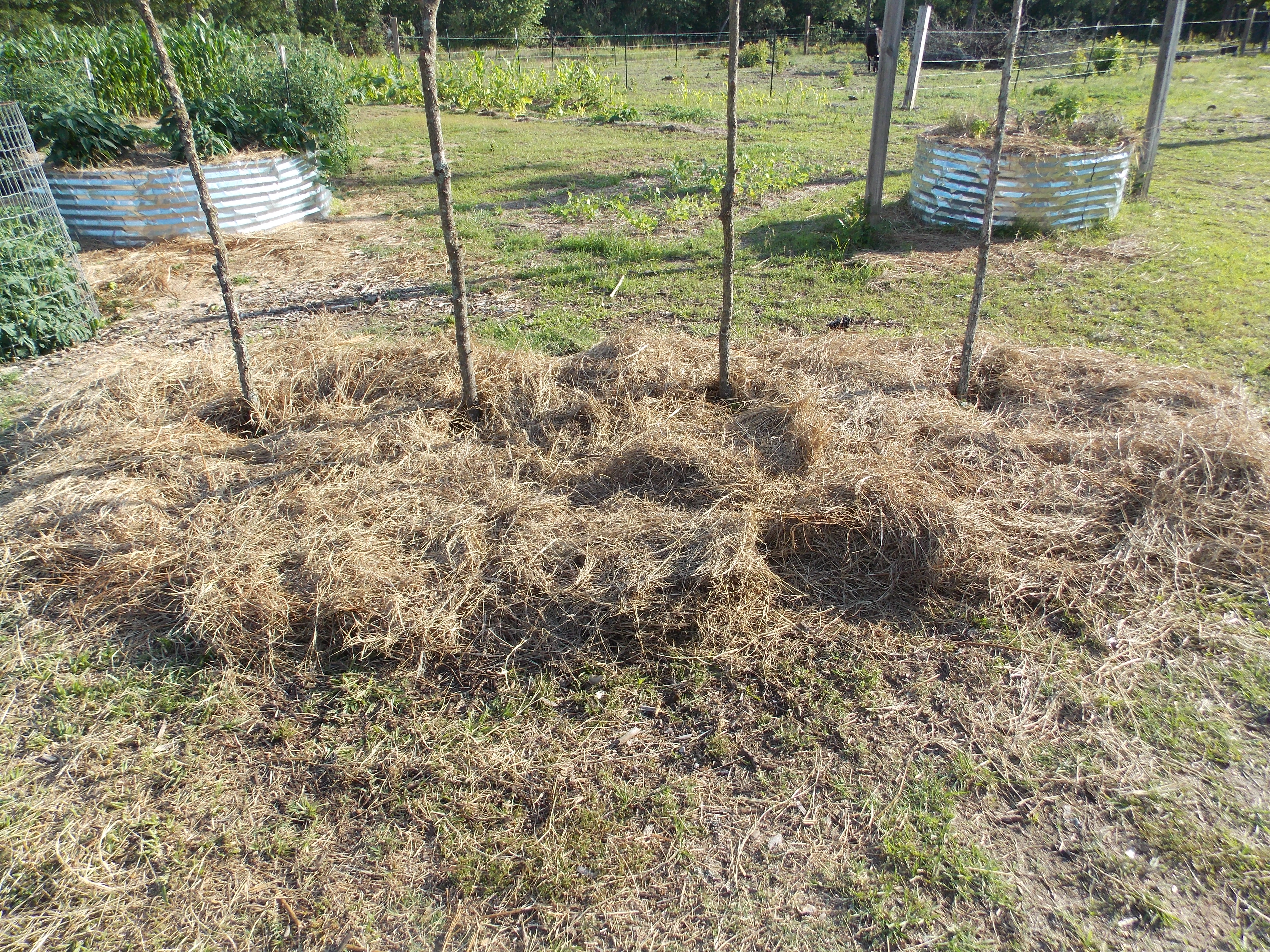
All four of the plants were planted to a depth of about 2/3’s of the length of the plant to aid in the development of a strong root system to support large productive plants (admittedly I am being optimistic here, but who doesn’t love fresh vine ripe tomatoes). There were no amendments added during the hole preparation as Jean Pain applied all of the compost to the top of the soil. Following his example we placed a three inch layer of compost down over the area of our plantation after the four plants were installed. This layer of compost was followed by a four inch layer of mulch to protect the compost from the damaging effects of the sun as well as to reduce weed competition and water evaporation. It is important to note that Jean Pain used no irrigation in his plantations throughout their growth.
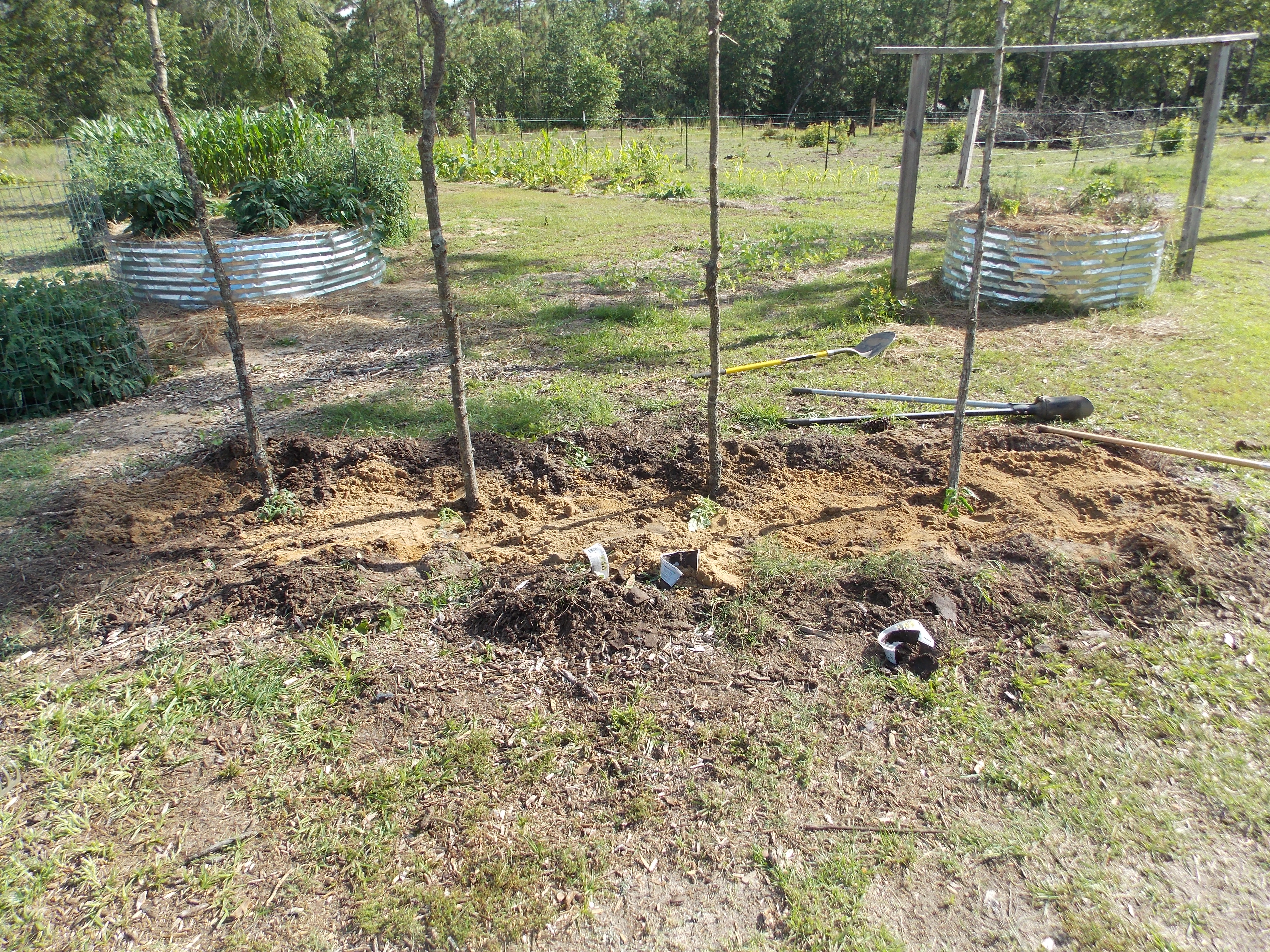
I am hesitant to forgo all irrigation for this first plantation due to the late planting date. Although South Carolina gets far more rainfall than Jean Pain’s location in Provence-Côte d’Azur-Mediterranean there will not be enough rainfall at this time to ensure that the plants start out healthy. Perhaps next spring I will attempt a plantation that is completely irrigation free.
So, to recap we have installed four indeterminate heirloom tomatoes in a plantation very near to our kitchen with a three inch layer of compost and a four inch layer of hay mulch. I will write follow up articles to keep you informed of the progress and hopefully provide you with ideas and inspiration to get out and do your own planting. There is nothing finer than the ripest fresh vegetables from your own garden picked that day for a meal or snack. Until next time!
 Carolina Permaculture
One thought on “A Jean Pain Tomato Plantation”