
If you have been on the internet for more than five minutes, or if that five minutes was spent on Facebook, Pintrest, or the like then you have likely seen this method for planting tomatoes. It involves planting four tomato plants around a buried bucket that has been drilled with holes and half filled with compost. This method also calls for a section of fence encircling the entire planting to act as a cage.

At first glance, and as it is presented in many different locations on the web, this method appears to be a great way to grow large amounts of tomatoes and easily keep them watered. Initially, watering is incredibly easy and the plants quickly grow to a size that they begin to act as a living mulch shading out competition. Unfortunately, this is about all of the positives that I can muster for this method.
At this point we will look into some of the cons associated with planting in this way. It only took me a short while to realize that using fence as a cage poses many issues. Depending on the type of fence used reaching in to harvest or tend the plants can be quite difficult. For my test plots I used the originally suggested 2×4 wire fence and was immediately meet with trouble.

It is impossible to reach though the openings of a fence this small even if you have small hands, which I do not. I attempted to overcome this problem by using line pliers to make larger openings spread around the entire cage to facilitate harvesting and plant maintenance (manual pest removal, inspection, and the like). I decided to make openings 4×4 running in a line from top to bottom separated by a single row of 2×4 openings.
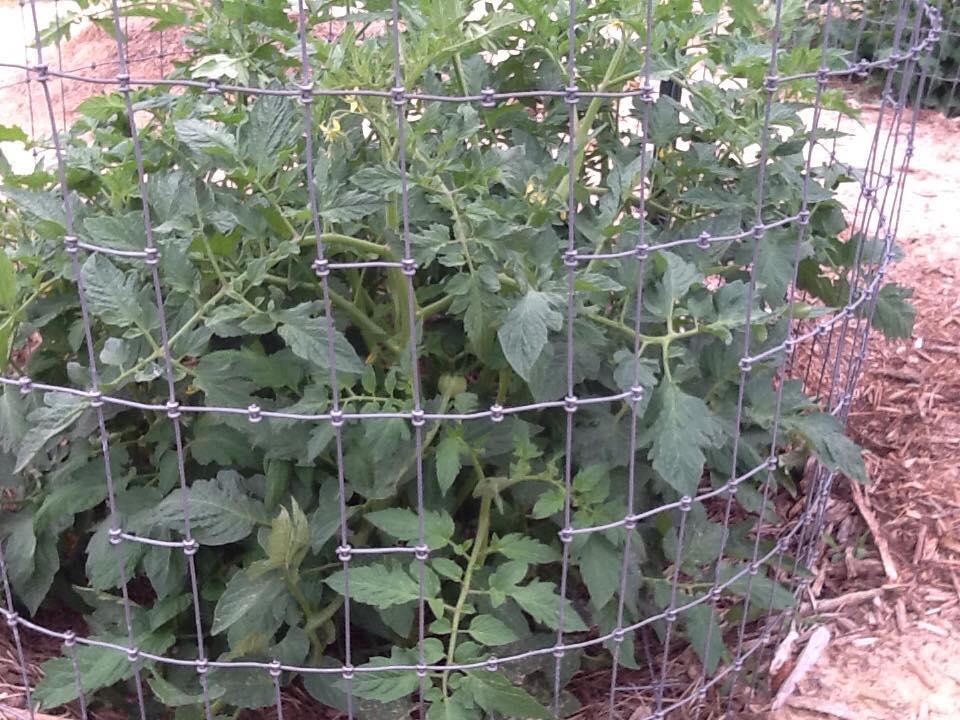
I resisted making the openings larger due to concerns about the strength of the cage. Looking back, I am not sure that those concerns were founded and I may need to increase the size of the openings once more as I still have difficulty reaching into the cage.
The next issue I had was with pest control and inspection. Our homestead and farm uses no chemical inputs whether fertilizer or pesticide. Wholesome food is highly important to me and my family, and this method makes manual pest control very difficult if not impossible. The first pest that presented itself was the Colorado Potato Beatle Larvae (Leptinotarsa decemlineata). Although they are very easy to spot and provide a nice treat to my chickens getting to them proved to be difficult through the fence cage, also the density by this time makes inspection of the entire plant impractical. I was able to reach some of the larvae near the outside but even these were troublesome. The red color of the larvae made them stand out and give me at least some notice that they were there another pest was not so kind. The next troublesome menace to present itself was the Hornworm (Manduca quinquemaculata). As previously stated the CPB larvae were easy to spot even through the dense foliage due to their bright red color the Hornworm is far better camouflaged however.
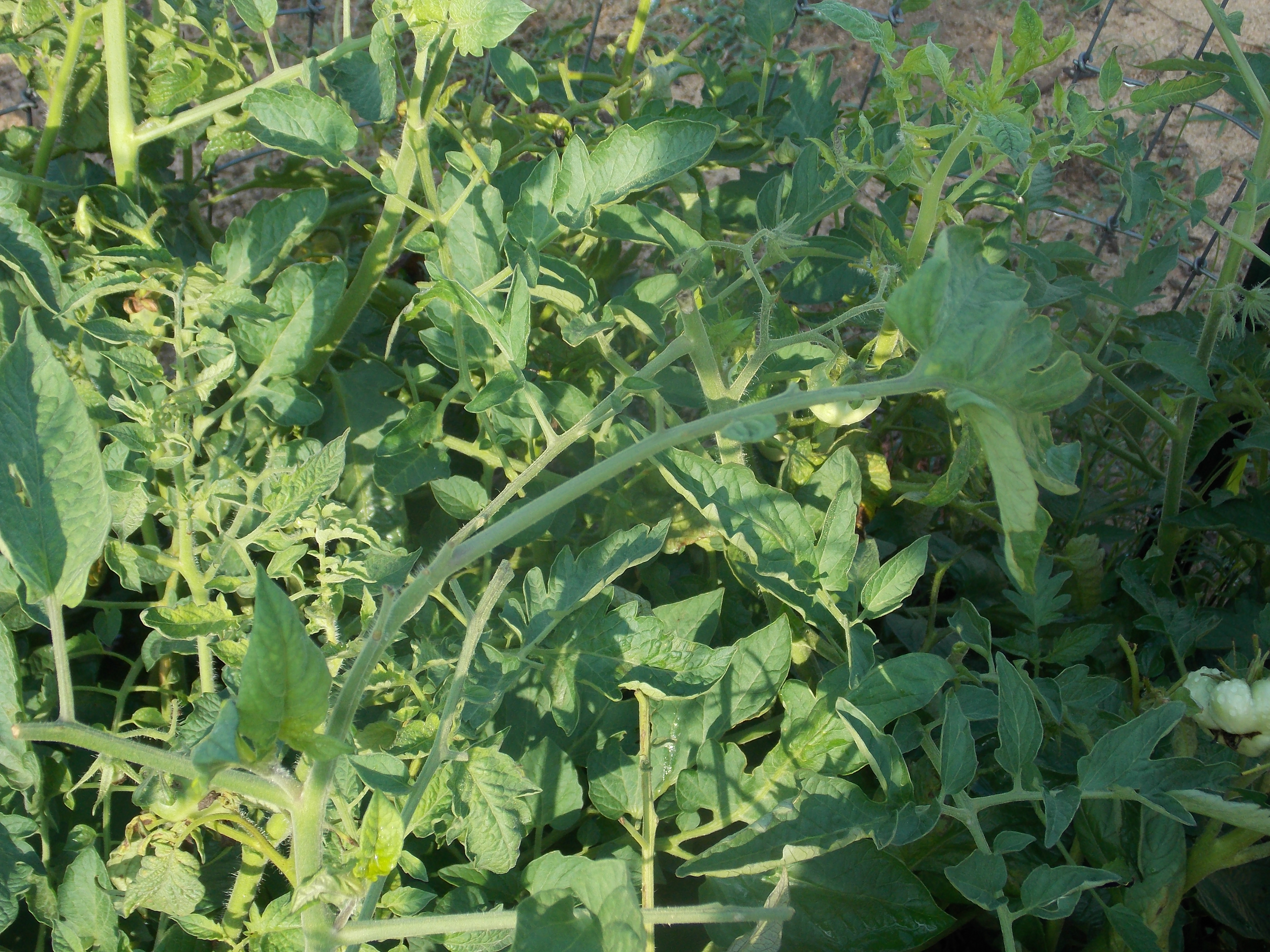
I was unable to see any telltale signs of the Hornworm’s presence due in large part to the size of the tomato plants and their proximity. It wasn’t until I saw an entire upper stem stripped bare, with the large larvae perched atop, that recognized the need for action.The action of course was to create a large chicken race with the poor larvae as the winners feast. It appears that the plant is going to recover and is even still producing.
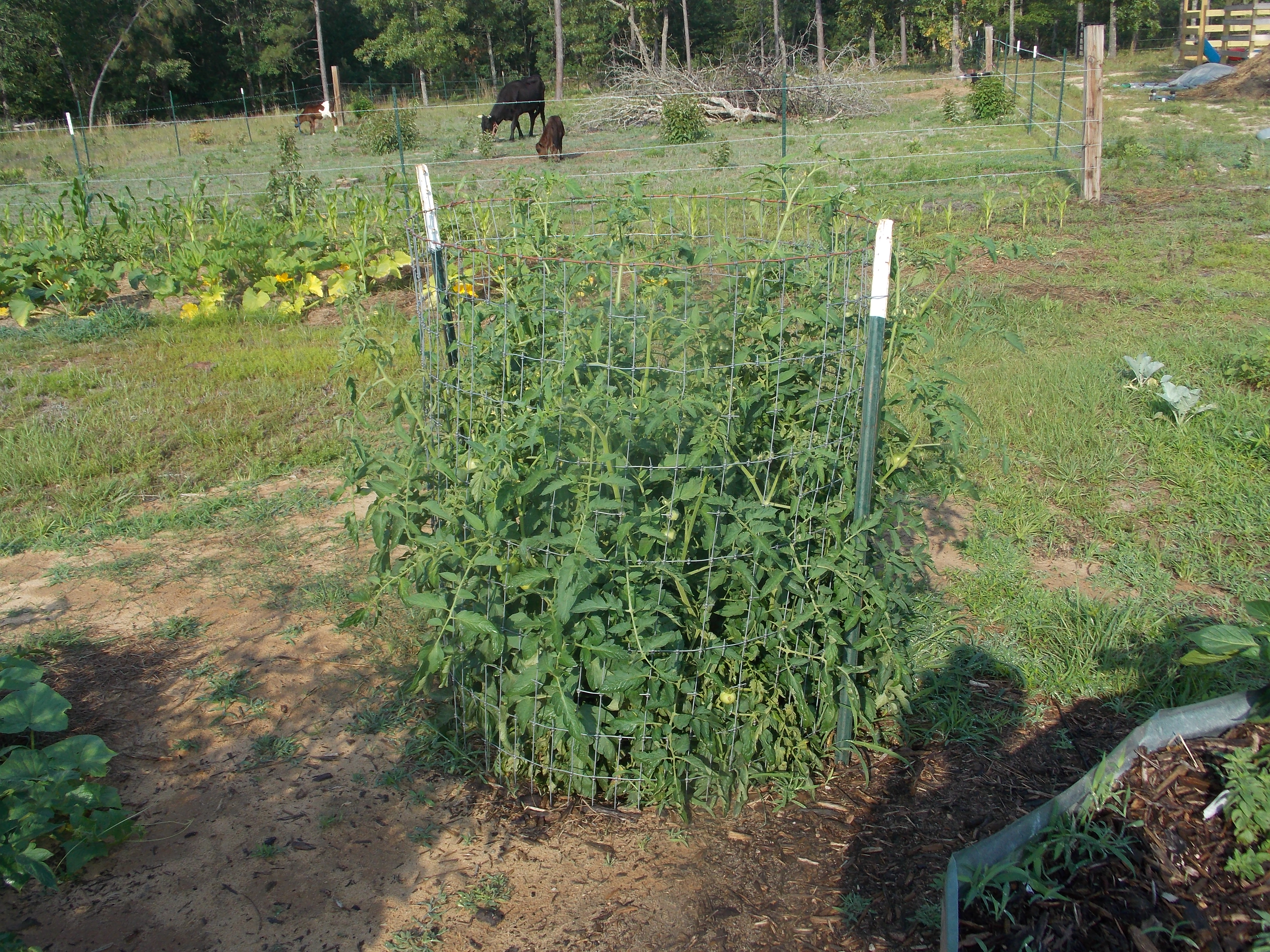
The final concern that I have with implementing this method is the potential spread of a plant disease. Due to the very tight spacing and the large size of the resulting plants they very quickly begin to intertwine which can lead to complete failure of the planting should a bacterial disease arise. While I have four plantings in this method for a total of sixteen plants I cannot afford to lose four plants at one time, and due to the interlacing of the plants removal of an infected plant would be virtually impossible and no doubt detrimental to the remaining plants.
Even though there are far many cons than pros to this particular system I am determined to see it through to completion. I do hope to harvest many tomatoes from the plantings and I do have a large quantity of fruits on the vine.

I will continue to document the progress until the end of the season so please check back for follow-ups. Thank you for reading and I hope to have more interesting reading in the future.
 Carolina Permaculture