Recently, I read a short booklet; The Methods of Jean Pain or Another Kind of Garden a PDF of which can be downloaded here. The contents of the booklet, originally written in 1973, describe the brushwood compost and gardening methods of the Frenchman Jean Pain. The format of the booklet in PDF form was, at times, difficult to follow but for the most part plainly written. The thing that originally prompted me to look into reading his work was the production of hot water via composting. I had seen reference to utilizing compost to create virtually free hot water from Geoff Lawton’s Permaculture Soils and I was fascinated. Of course, as I began to read I found that hot water was only the beginning of the uses of composting that Jean Pain delved into. Brushwood; if you have a woodlot that you maintain then you have it. Protecting your land from wild fire creates heaps and heaps of brushwood. Whatever is to be done with it? Crating it off to be disposed of elsewhere is hardly a responsible solution and is extremely costly. Burning, whether as an open field burn or as firewood is the way that most people dispose of the seemingly waste material. Jean Pain however had another idea, reclaim its nutrient and energy value through composting. This is only our first attempt and our scope is much smaller than the possibilities. For this first pile of brushwood we are simply interested in refining our gathering methods as well as heap formation.
Our homestead and small permaculture farm is located between Columbia and Aiken South Carolina on what is called the fall line. This particular area is noted for extremely sandy soils with little to no organic matter. This is precisely what we have here and is one of the reasons we are so interested in brushwood composting. Although we have other composting going on here with animal manure and plant residues brushwood is far more abundant, and would provide us with a great deal more compost to use in soil creation. Additionally, the amounts of brushwood available would allow us to create more of our own energy on-site thus reducing our outside inputs.
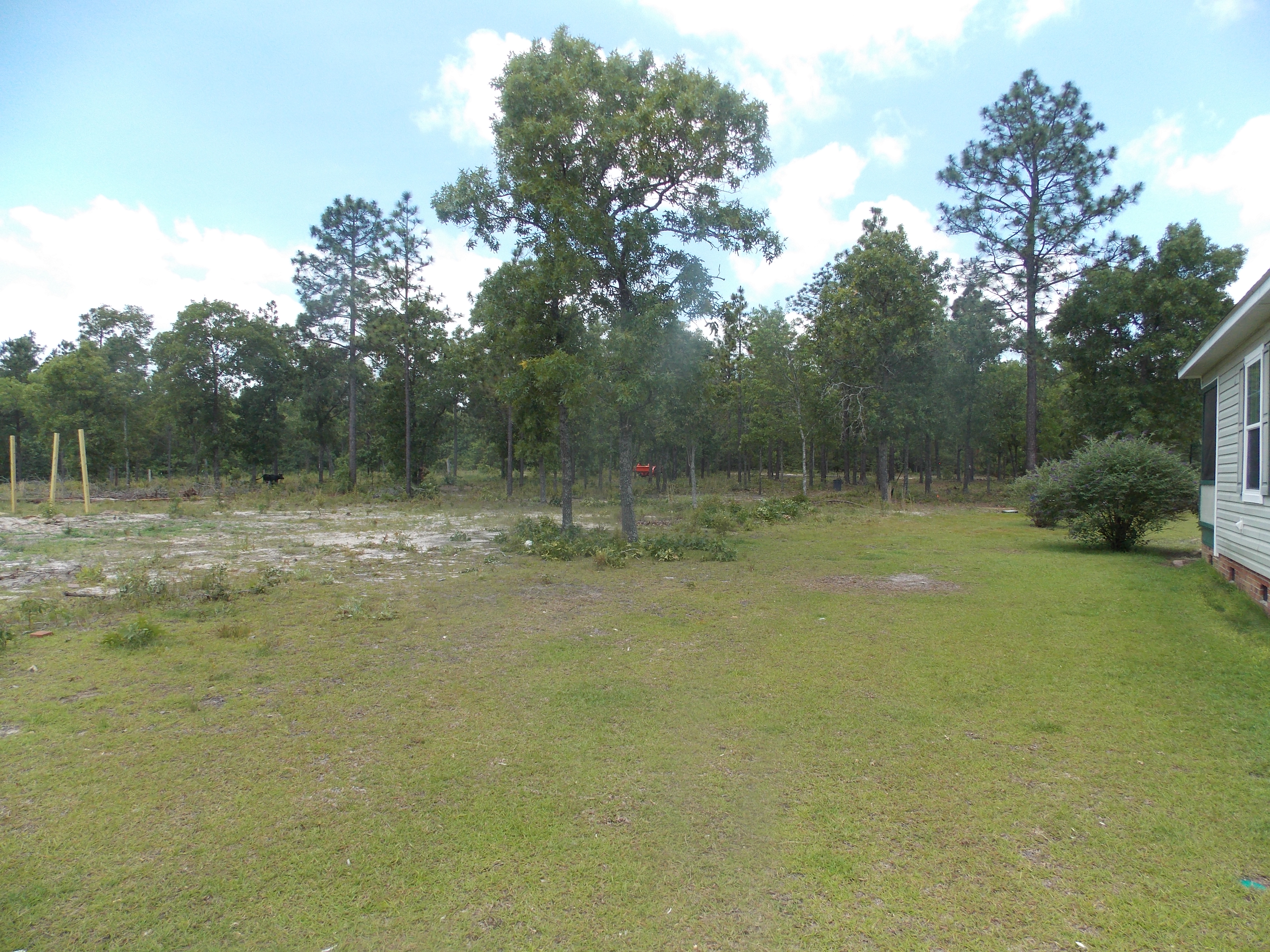
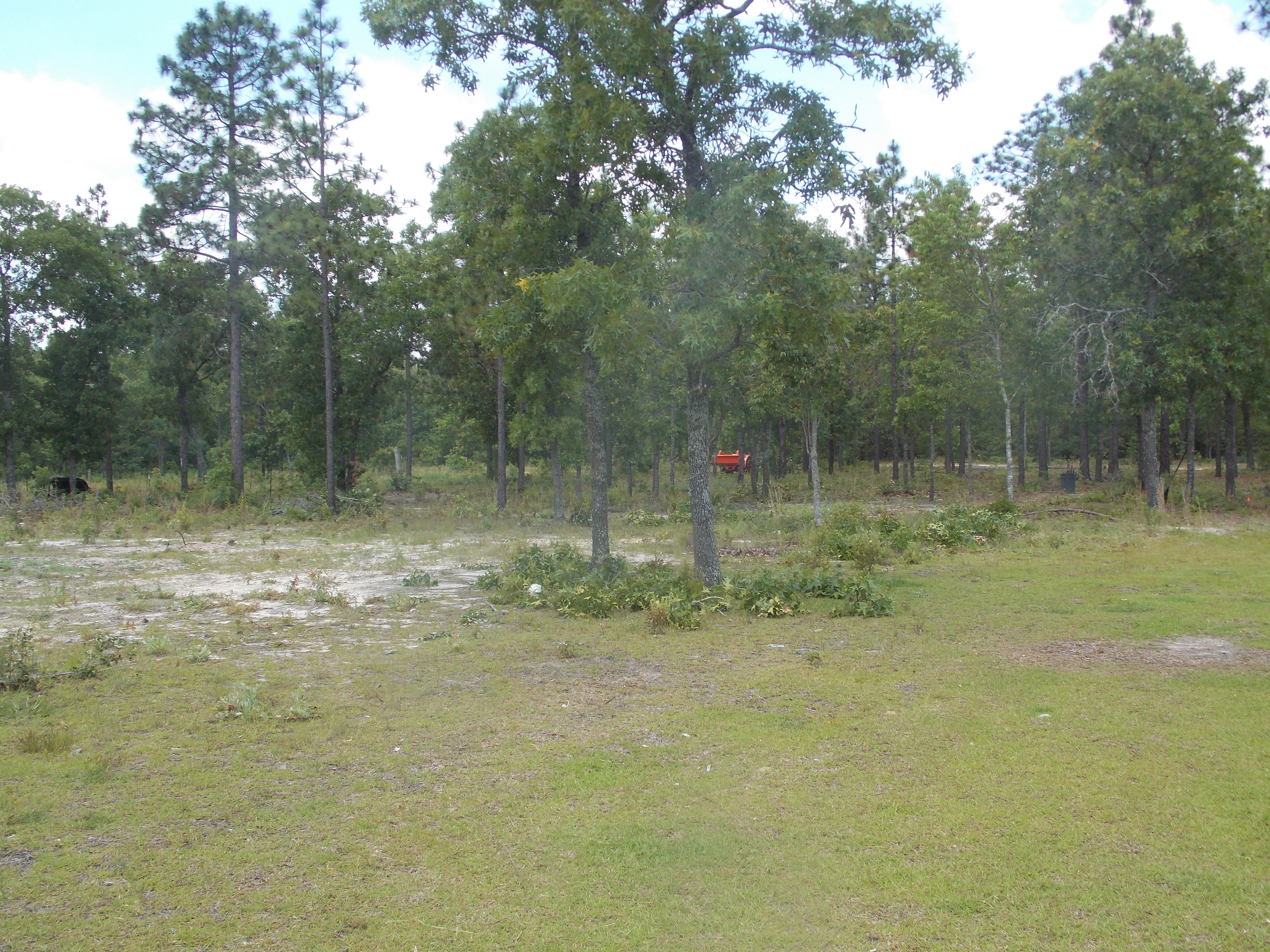
We began by working in this small area near our home. Although the density of low limbs and undergrowth is slight the proximity to our home and existing water lines made it ideal for us to begin with. There are areas of our farm that are much, much, more dense and require attention but this provides a nice area for learning. This area is predominately wooded in Turkey Oak (Quercus laevis) with some Laurel Oak (Quercus laurifolia) and Longleaf Pine (Pinus palustris). The most difficult part is keeping the branch sizes below the recommended 8mm for manual composting, and I must admit that may have been exceeded on some occasions. This is, after all, a learning experience.
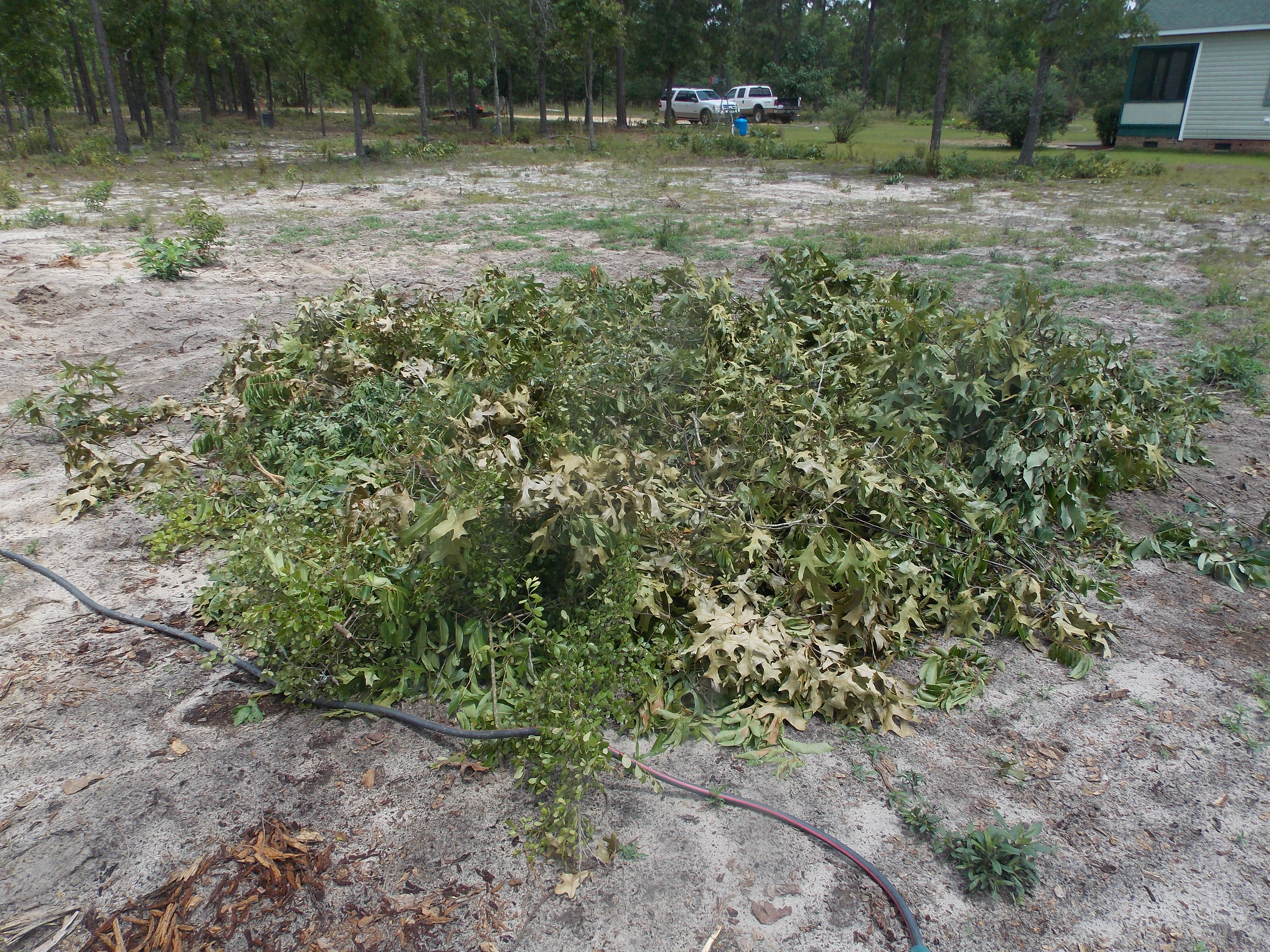
This is our pile after gathering most of the required material. One difficulty for us was visualizing the metric volume references coming from an imperial standard education. This lead to a few hiccups with regard to the size of the pile. My initial thought was that the pre-compost pile needed to be 12 foot x 12 foot x 4 foot, later review proved the size to be more in line with 6 foot x 6 foot x 4 foot. So the pile you see in the above photograph is actually the correct volume only in the wrong size. We have since adjusted the pile size to 6x6x4. We will keep this pile watered and allow the initial phase of composting begin. Jean Pain recommended 21 days for this first stage. At the end of the 21 day period we will begin the process of piling for completion of the brushwood compost process.
I will write more about the continuing process and look forward to creating other piles to provide all of the hot water and heating needs for our out buildings and eventually for our home. Of course we can also look into hot air and natural gas (methane) production in the future. The possibility of creating all of our needed cooking fuel as well as the potential to create our own motive fuel for tractors and generators is very appealing. However, before any of that can move forward we will have to acquire a PTO chipper for our tractor and have more experience with the composting process. For now we will make the most of manual composting to improve our soil and thus our vegetable and fruit production. I believe that this type of composting coupled with good permaculture design and practices will make our small farm exceedingly productive and profitable. I look forward to future projects and articles detailing our successes and failures. I hope that you will follow along.
 Carolina Permaculture
2 thoughts on “Our First Brushwood Compost Experiment”